
Search California Traffic Cases
Traffic court records in California are kept by all 58 county Superior Courts. No city in California runs its own traffic court. Each citation goes to the county where the stop took place. You can search these records online through county portals. Many courts let you look up cases by name or case number. Some charge fees to view full details. Most people can search from home at any time of day or night.
California Traffic Court Quick Facts
How California Handles Traffic Cases
California operates a county-based traffic court system. All 58 counties use their Superior Court to process traffic citations. When an officer writes a ticket, that case gets filed in the county where it took place. The court clerk enters the citation into the system. This can take four to eight weeks from the date you got the ticket. You do not need to wait for mail from the court. The appear by date on your citation is the day you must take action.
Most California counties use online case systems. Tyler Odyssey is common in many areas. Other counties built their own search tools. Los Angeles has over a million new citations each year. Smaller counties like Alpine process far fewer cases. But every county follows the same basic rules under the California Vehicle Code. You can search for your case as soon as the court enters it. Name searches work in most systems. Case numbers work better if you have one from your ticket.
The California DMV tracks your driving record separately. When a court reports a conviction, the DMV adds it to your file. Most violations stay on your record for three years. Two point violations like DUI stay for ten years. The DMV charges two dollars for an online copy of your record. You can request this at dmv.ca.gov any time you need it. Traffic school can keep some tickets off your DMV record if you qualify. You must ask the court for traffic school before your deadline.
California courts send information about cases, fines, and deadlines on a courtesy notice. You should get this two to four weeks before your appear by date. But the law does not require the court to mail you anything. If you never get a notice, you still must meet the deadline on your ticket. Many people search online to find their case details. This works faster than waiting for mail.
Search Traffic Records Online in California
The California Judicial Council offers a self-help guide for traffic tickets at selfhelp.courts.ca.gov/traffic. This site explains your choices when you get a ticket. It covers how to pay, how to go to trial, and when you can use traffic school. The guide includes a county lookup tool. Pick your county to find the local court contact details. This is the best place to start if you have questions about your case in California.
You cannot search all California traffic cases from one website. Each county runs its own system. Most county Superior Courts have an online portal. You go to the county site where your ticket was issued. Look for a section called online services or case search. Enter your name or citation number. The system shows basic case details. Some counties charge fees for searches or to view documents. Others let you look up cases for free.
Tyler Odyssey serves many California counties. This system includes Alameda, Fresno, Kern, Sacramento, San Diego, Santa Barbara, and more. If your county uses Odyssey, the portal looks similar across locations. Other counties use different vendors. Los Angeles has a custom system because it handles so many cases. San Francisco and several other counties use nCourt. A few rural counties like Alpine do not offer online access yet. You must call or visit those courts in person to get case details.
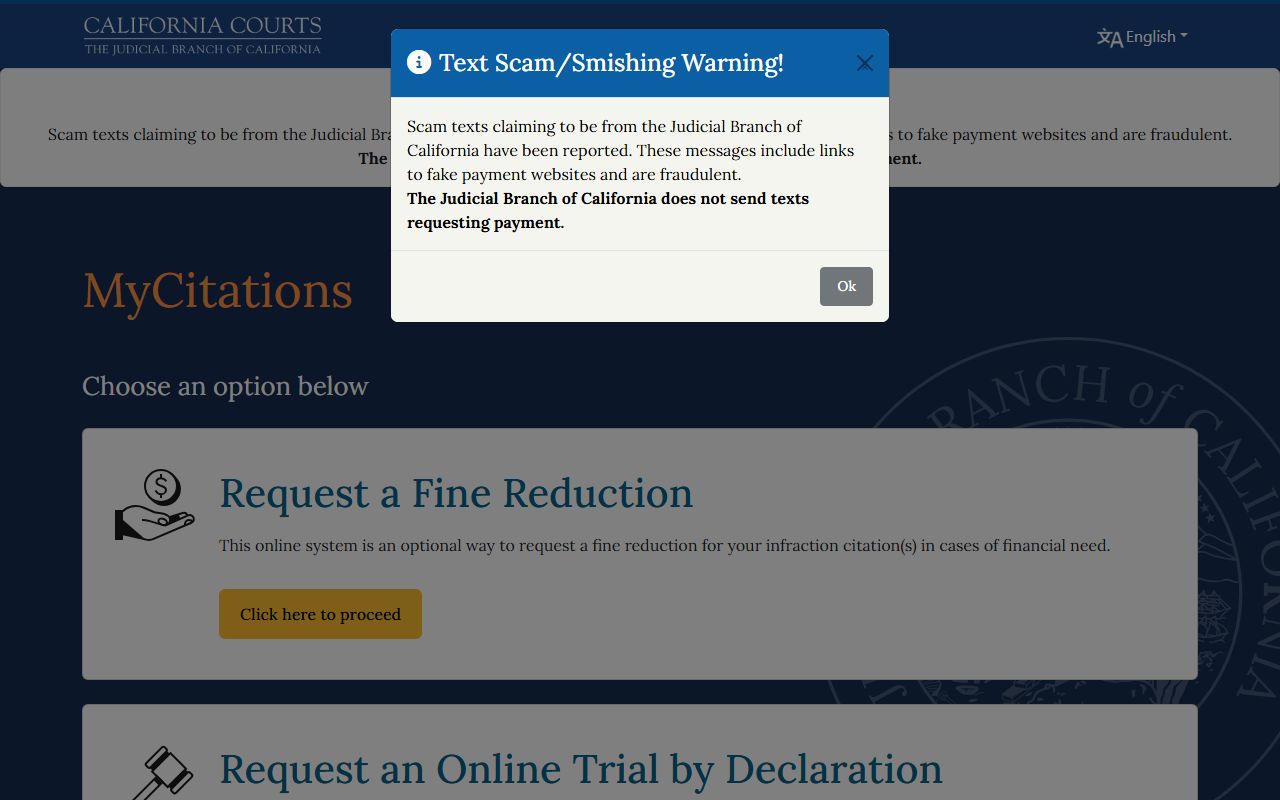
The state also runs MyCitations at mycitations.courts.ca.gov. This tool helps people who cannot afford to pay their fines. You can request a fine reduction based on income. The system asks about your financial situation. If you qualify, the court may lower your total amount due. This option works for many California residents who receive public benefits or have low income. It does not erase the ticket. It just makes the fine easier to pay over time.
What Happens After You Get a Ticket
When an officer gives you a citation, the ticket goes to the county court. The court must enter it into the case system. This takes time. Most courts need four to six weeks. Some take longer if they have a backlog. Do not call the court right away. They will not have your case yet. Wait at least three weeks before you try to search or call about a new ticket in California.
After the court processes your citation, they mail a courtesy notice. This notice lists your bail amount. That is what you pay if you plead guilty or no contest. The notice also shows your due date and your options. One option is to pay the fine. Another is to go to trial. A third option may be traffic school if you are eligible. The notice tells you if traffic school is allowed for your violation in California. Not all tickets qualify for school.
If you do nothing by the due date, the court can take action. They add a civil assessment fee. This can be up to three hundred dollars on top of your original fine. The court may also put a hold on your license at the DMV. You cannot renew your registration until you clear the hold. Collection agencies get involved if the debt stays unpaid. Ventura County and several others use Linebarger Goggan Blair and Sampson for collections. Los Angeles uses Alliance One. These firms add their own fees to what you owe.
Most California counties let you request an extension. You get one chance to push back your due date. Extensions range from thirty to ninety days depending on the county. You must ask before your original deadline. Some courts let you request this online. Others require a phone call or a visit to the clerk office. After you get an extension, that new date becomes final. If you miss it, the court treats it as a failure to appear.
Traffic School Eligibility in California
Traffic school lets you keep a conviction off your DMV record. This helps your insurance rates stay low. You must meet certain rules to qualify. First, you cannot have gone to traffic school in the past eighteen months. California counts from violation date to violation date. Second, the violation must be a one point offense under California Vehicle Code section 12810. Third, you cannot have been driving a commercial vehicle when you got the ticket.
Some violations never qualify for traffic school in California. These include:
- Speeding more than twenty five miles per hour over the limit
- Alcohol or drug related violations
- Reckless driving charges
- Violations in a commercial vehicle
- Failure to appear charges added to your case
If you are eligible, you must pay the full bail amount plus a traffic school fee. Most California counties charge fifty two dollars for the administrative fee. A few charge more. El Dorado charges sixty nine dollars. San Luis Obispo charges seventy dollars. You also pay the traffic school itself. Online schools usually cost between twenty and fifty dollars. The court gives you a list of approved schools. You pick one and sign up. The DMV keeps a list of licensed traffic schools at dmv.ca.gov if you want to check that a school is real before you pay.
You have sixty days to finish traffic school in most counties. Some give you longer. The school reports your completion to the court. Then the court reports it to the DMV. The conviction becomes confidential on your driving record under Vehicle Code section 1808.7. Insurance companies cannot see it. But if you get another ticket within eighteen months, you cannot use traffic school again. The second ticket will show up on your DMV record even if you otherwise qualify for school in California.
Trial Options for Traffic Tickets
You can fight a ticket in California. Two types of trial are available. An in person trial means you and the officer both go to court. You do not pay bail first for an in person trial. You just show up on the date the court assigns. The other option is trial by written declaration. This lets you argue your case on paper. The officer also submits a written statement. The judge reads both sides and makes a decision. But you must pay bail before you can use trial by written declaration in California.
For a trial by written declaration, you fill out form TR-205. Explain why you think the ticket is wrong. Attach any evidence you have. Mail it to the court with your bail payment. The officer has time to respond in writing. Then the judge reviews everything. This process takes up to ninety days. The court mails you the decision. If you win, you get your bail money back. If you lose, the bail goes toward your fine. You then have the right to ask for a new trial in person. This is called trial de novo. Some online systems make you waive this right if you want to submit your trial by declaration electronically.
In person trials work differently. You request a trial by checking the box on your courtesy notice or by contacting the court. The court schedules a date. You must appear at the courthouse. The officer must also appear. If the officer does not show up, the judge usually dismisses the case. If both of you are there, the judge hears testimony and looks at evidence. The judge makes a ruling that day or soon after. This takes more time than paying the fine. But it gives you a chance to explain what happened and challenge the officer account of the stop in California.
DMV Driving Records and Points
The California DMV keeps a record of every traffic conviction. When a court finds you guilty or you pay a fine, the court clerk sends an abstract to the DMV. This is required under Vehicle Code section 1803. The DMV adds the conviction to your driving record. How long it stays depends on the type of violation. Most infractions stay for three years. Serious violations stay longer. DUI convictions stay for ten years on your record in California.
Points go on your record for certain violations. One point offenses include things like speeding and running a red light. Two point offenses include reckless driving and hit and run. If you get too many points in a short time, the DMV can suspend your license. Four points in twelve months leads to suspension. Six points in twenty four months also leads to suspension. Eight points in thirty six months is another threshold. The DMV will send you a warning letter before they take action so you know where you stand in California.
You can request a copy of your driving record from the DMV. The online version costs two dollars. Go to dmv.ca.gov and log in to your account. The system shows all your convictions and points. Paper copies by mail cost five dollars. The DMV can also provide older records on microfilm for twenty dollars per year. Your insurance company checks your record when they set your rates. More points usually mean higher premiums. Keeping your record clean saves money over time in California.
Some convictions do not add points. Parking tickets never add points. Non moving violations like expired registration do not add points either. Fix it tickets also do not add points if you prove you fixed the problem. You pay a twenty five dollar proof of correction fee in most counties. Show your corrected item to an officer or bring proof to the court clerk. Once verified, the case closes with no points added to your DMV record in California.
Fines and Fees Across California
Traffic fines in California include the base fine plus many added fees. The Judicial Council sets a uniform penalty schedule under Vehicle Code section 40310. Counties must follow this schedule. But the total you pay includes state and county fees on top of the base amount. A fifty dollar base fine often becomes two hundred dollars or more after all fees are added. Court construction fees, county fees, and state surcharges all pile on to the base fine amount in California.
Common fees across California counties include the traffic school administrative fee. This is usually fifty two dollars. Proof of correction costs twenty five dollars per violation. Civil assessments for failure to appear range from one hundred to three hundred dollars. If your case goes to collections, those agencies add their own fees. Payment plans also have setup fees. Many counties charge thirty five dollars to start a plan. Monthly payments may have small processing fees too.
Copy fees and search fees apply if you need documents from the court. Most counties charge fifty cents per page for copies. Certified copies cost forty dollars plus the per page fee. Record searches over ten minutes cost fifteen dollars per name in many counties. Online case access may be free or it may cost money depending on the county. Los Angeles charges $4.75 per name search. Document downloads cost up to forty dollars depending on page count. Other counties let you search for free but charge to view or print documents from the case file in California.
Differences Between California Counties
Each California county runs its own traffic court operations. The basic law is the same statewide. But local procedures vary quite a bit. Hours of operation differ. Some courts open at seven thirty in the morning. Others open at eight or nine. Some close at three. Others stay open until five. A few counties offer night court once or twice a month. Kern County and Ventura County both hold evening sessions for people who work during the day in California.
Extension policies also vary by county. Alameda County gives sixty day extensions. Fresno gives ninety days. San Mateo only gives thirty days. You get one extension in most places. After that, you must take action or face penalties. Payment plan minimums differ too. Some counties require at least twenty five dollars per month. Others set the minimum at fifty dollars. The court looks at your income and what you owe to decide if you can use a plan in California.
Online services are not the same everywhere. Large counties like Los Angeles, San Diego, and Orange have robust online portals. You can search cases, view documents, and pay fines all from home. Small counties may have limited online access or none at all. Alpine County does not offer online case lookup. You must call or visit the courthouse in person. Del Norte has an online portal but it does not include all case information. You may still need to call or go to the clerk office to get full details about your case in California.
Browse California Traffic Courts by Location
Search by County
Every county in California handles traffic cases through its Superior Court. Find your county below to get local contact details, fees, and online access information.
Los Angeles County | San Diego County | Orange County | Riverside County | San Bernardino County | Santa Clara County
View All 58 California Counties →
Search by City
Major California cities do not run their own traffic courts. All cases go to the county Superior Court. Find your city to see which county court handles your ticket.
Los Angeles | San Diego | San Jose | San Francisco | Fresno